Traits Atlas
Codebook, Minimums, Exceptions
Contaminated Residue
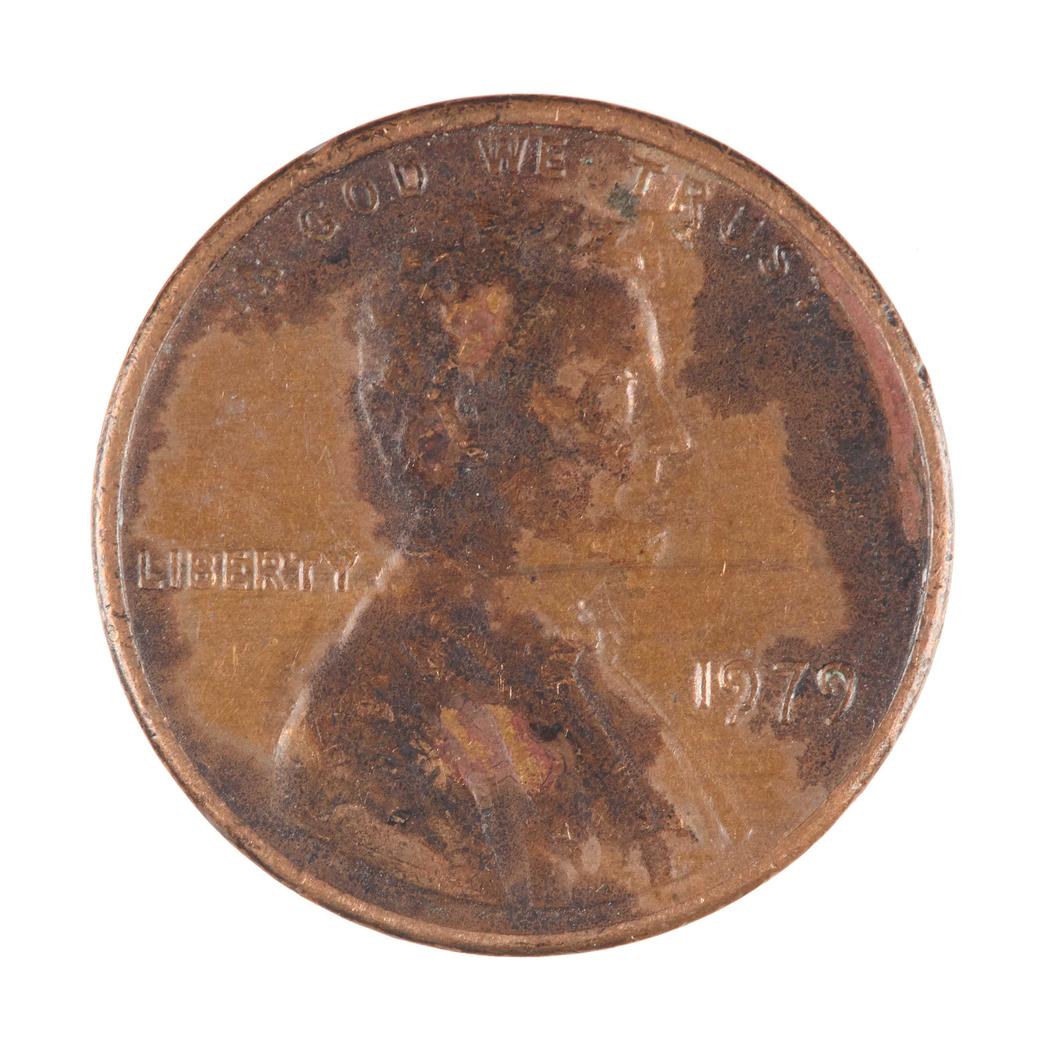
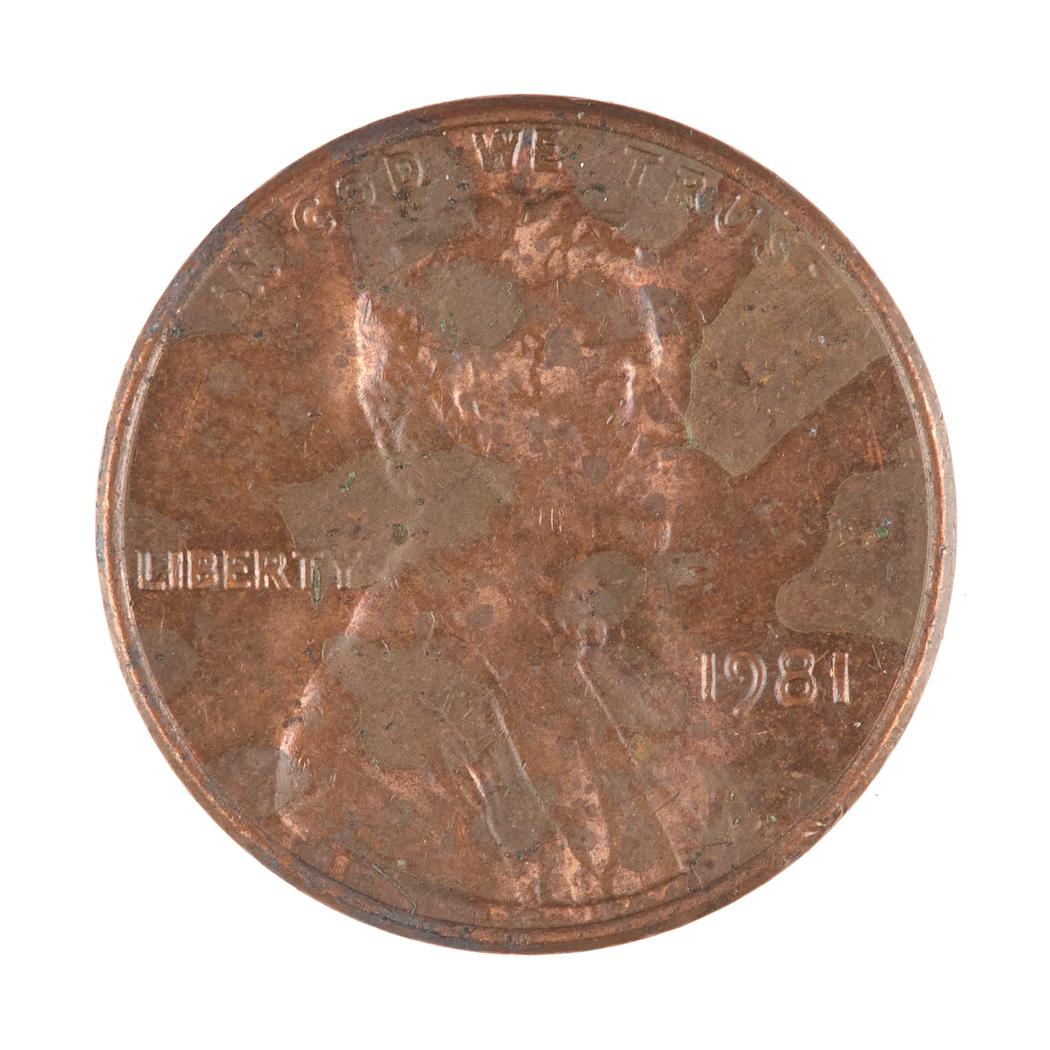
Summary: The Contaminated trait refers to any visible foreign material that has adhered to the coin after minting – substances that neither belong to its metallic composition nor derive from oxidation alone. These residues embody the CENT’s contact with the world: its exposure to adhesives, paints, oils, salts, and other agents of touch, time, and accident.
Definition: Qualifies when non-metallic materials are clearly present and have physically altered the coin’s surface, color, or relief. Unlike patina, which arises from internal chemistry, contamination represents *external interaction* – matter imposed upon copper. This category includes diverse subtypes defined by their material behavior and visual signature.
Conceptual Note: Contaminations are the CENTS’ most direct witnesses of human or environmental contact. They record the world’s incidental gestures – adhesive fingerprints, spills, salt blooms – transforming the coins into hybrid artifacts.
How we name what we can’t test: The Contaminated trait is built as a practice of surface-reading. We don’t scrape, dissolve, or assay; we study photographs, compare against known material behaviors, and look for repeatable cues across many coins. A residue becomes legible through its grammar: adhesive tends to form films and „ghost rectangles”; paint sits as chromatic layer; salt crystallizes in blooms; grime dulls and embeds; tar-like deposits build relief. The subtrait names are therefore not claims of chemistry, but field names – tools for seeing.
Why it’s hard (and why that matters): On copper, different substances age toward the same visual end: yellowing films, darkened veils, granular crusts. Light, camera processing, and abrasion can flip a read from „glue” to „varnish,” from „salt” to „verdigris-adjacent.” Some coins carry mixtures and sequences: spill >> handling >> dust – so the surface becomes stratigraphic: layered like a tiny archaeological record, where one contact event settles over another. In these cases, we chooses clarity over certainty: we classify by what is materially present as residue and how it behaves, while keeping space for the unknown.
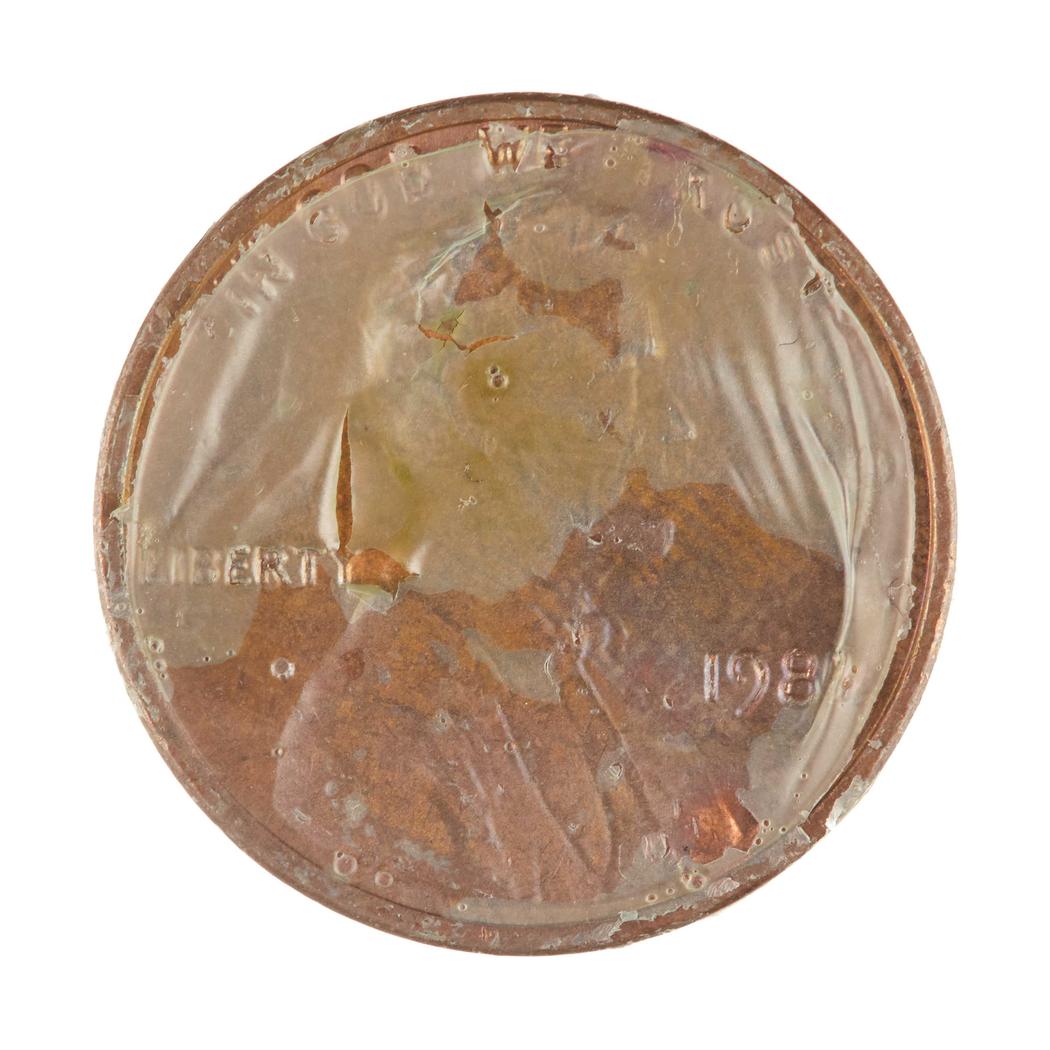
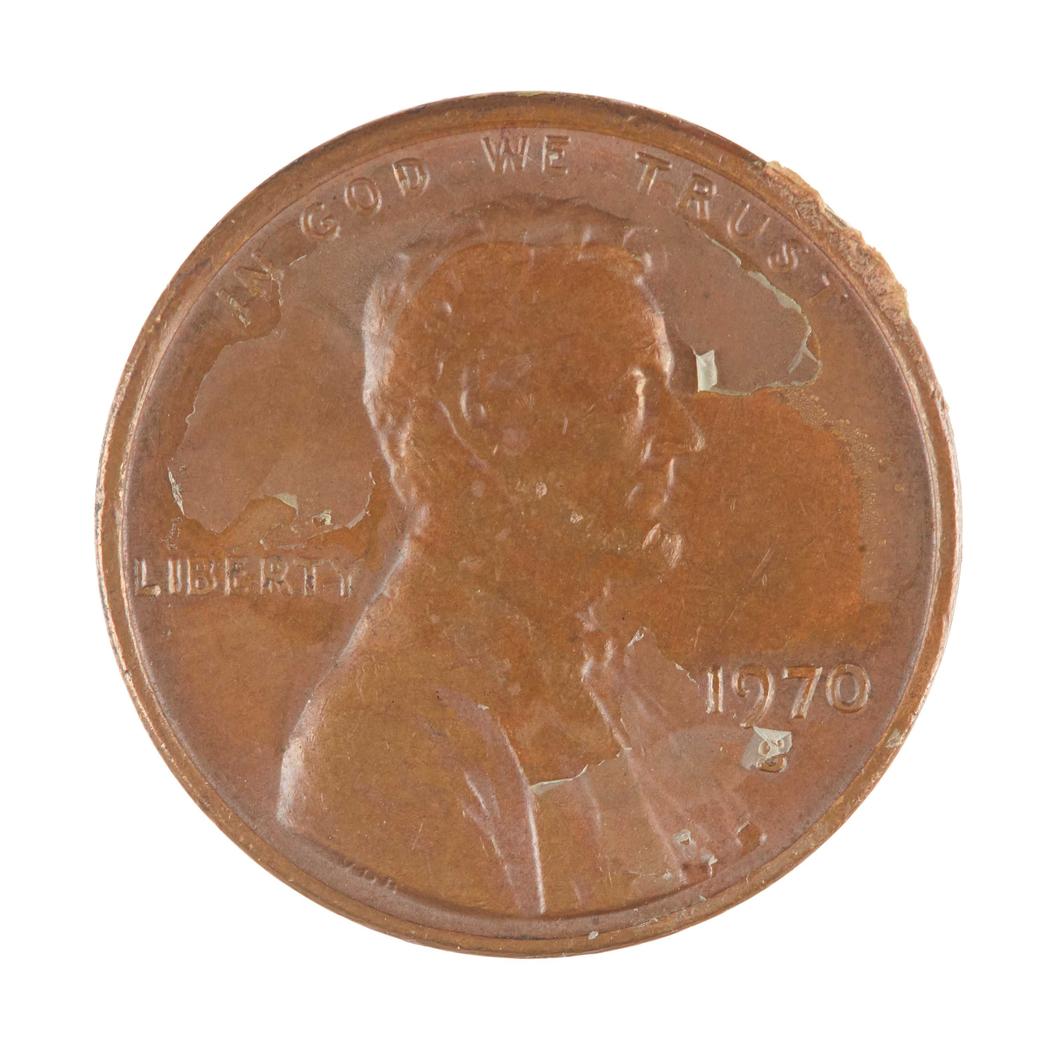
Consensus by surface-reading (the „Swiss woodworkers” debate): Some contaminations only became legible through collective scrutiny. The first glue-coated Cents were met with skepticism, so we turned outward: a Swiss woodworkers’ forum examined the photographs, debating sheen, thickness, edges, and failure patterns – arguing, as craftsmen do, over which glue this could be. Those screenshots, carried back into the Traits Council, shifted the claim from intuition to shared evidence, and Glue became an approved subtrait.
Subtraits of Contaminated
Glue
Adhesive residues that have hardened into translucent or amber films. Often semi-glossy with soft edges; may slightly obscure Abe or lettering.
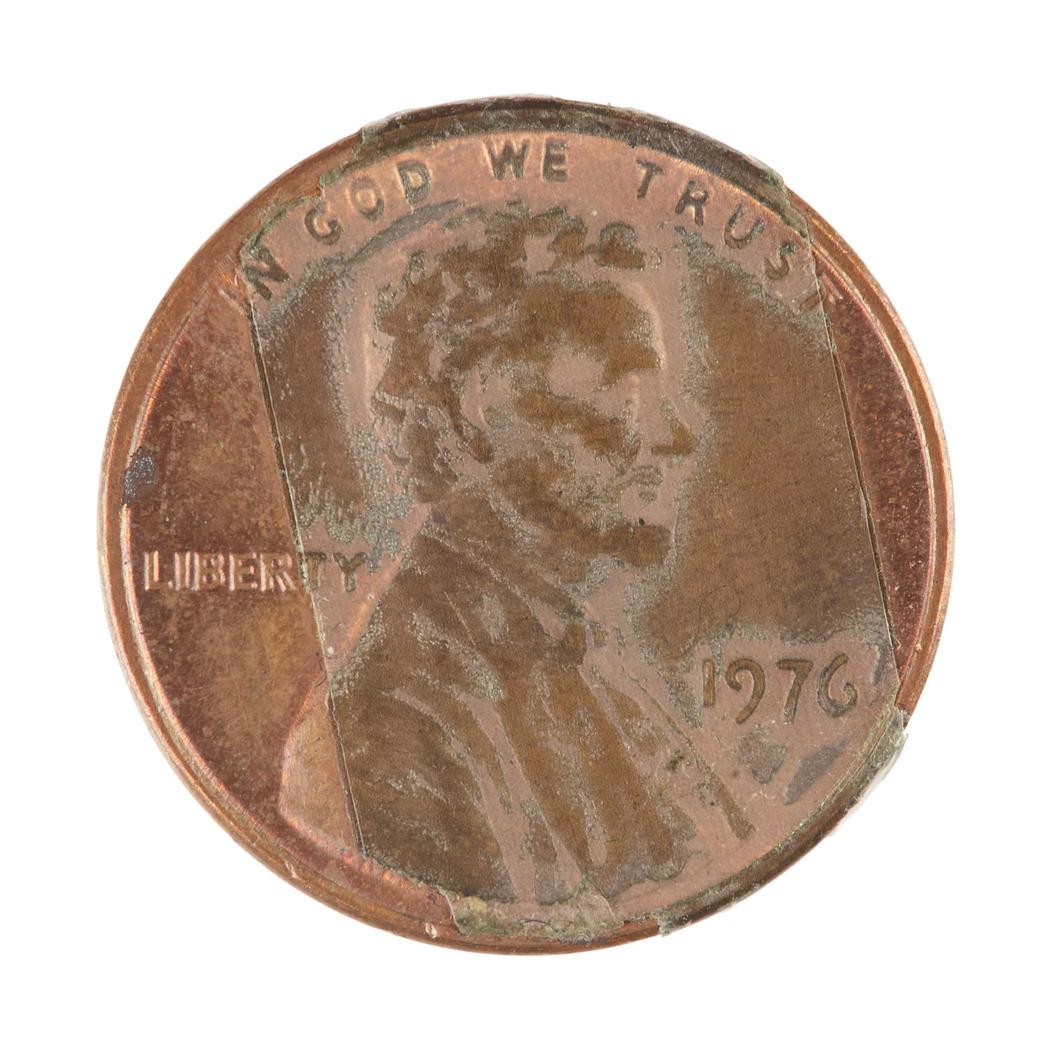
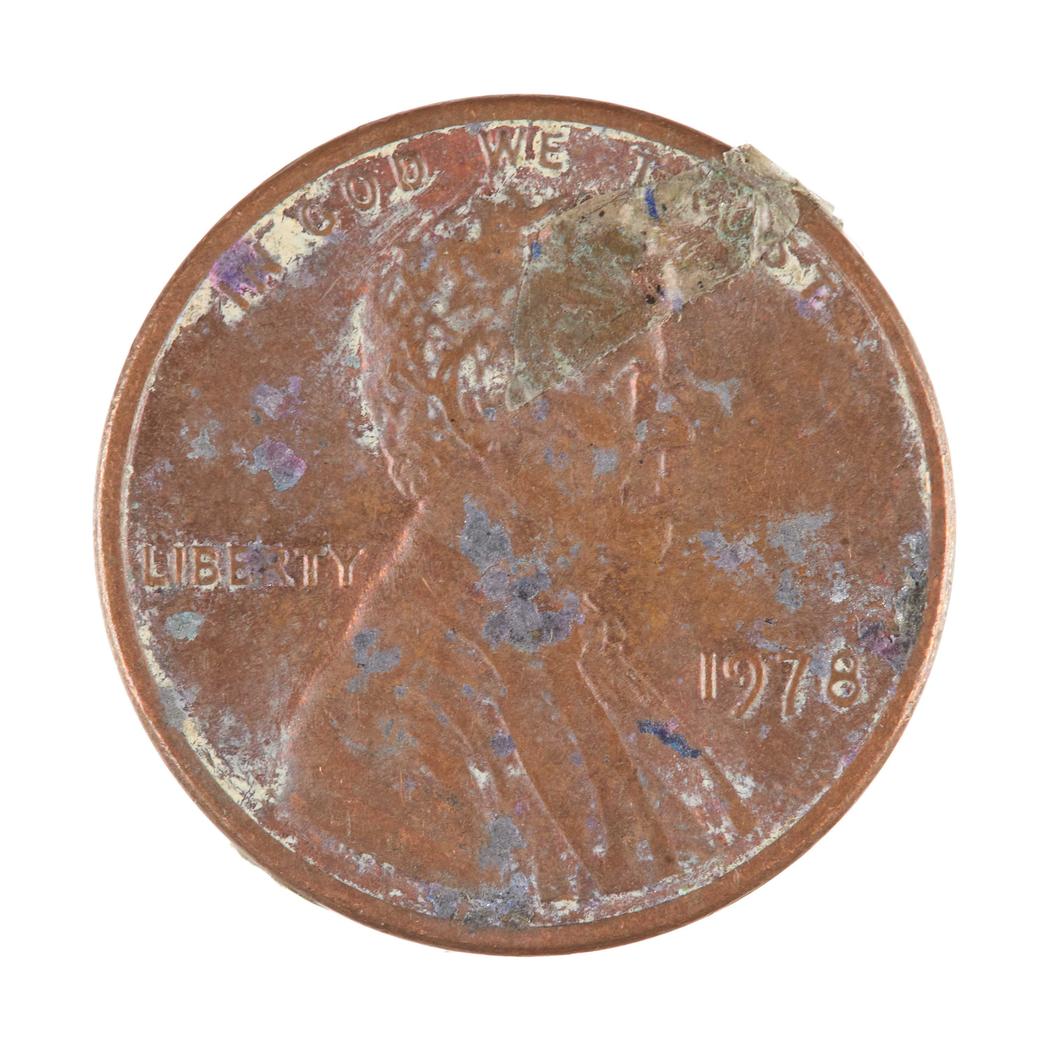
Scotch Tape
Transparent adhesive strips or their chemical residues, usually forming rectangular ghosts or linear patterns where plastic covers or once covered the metal.
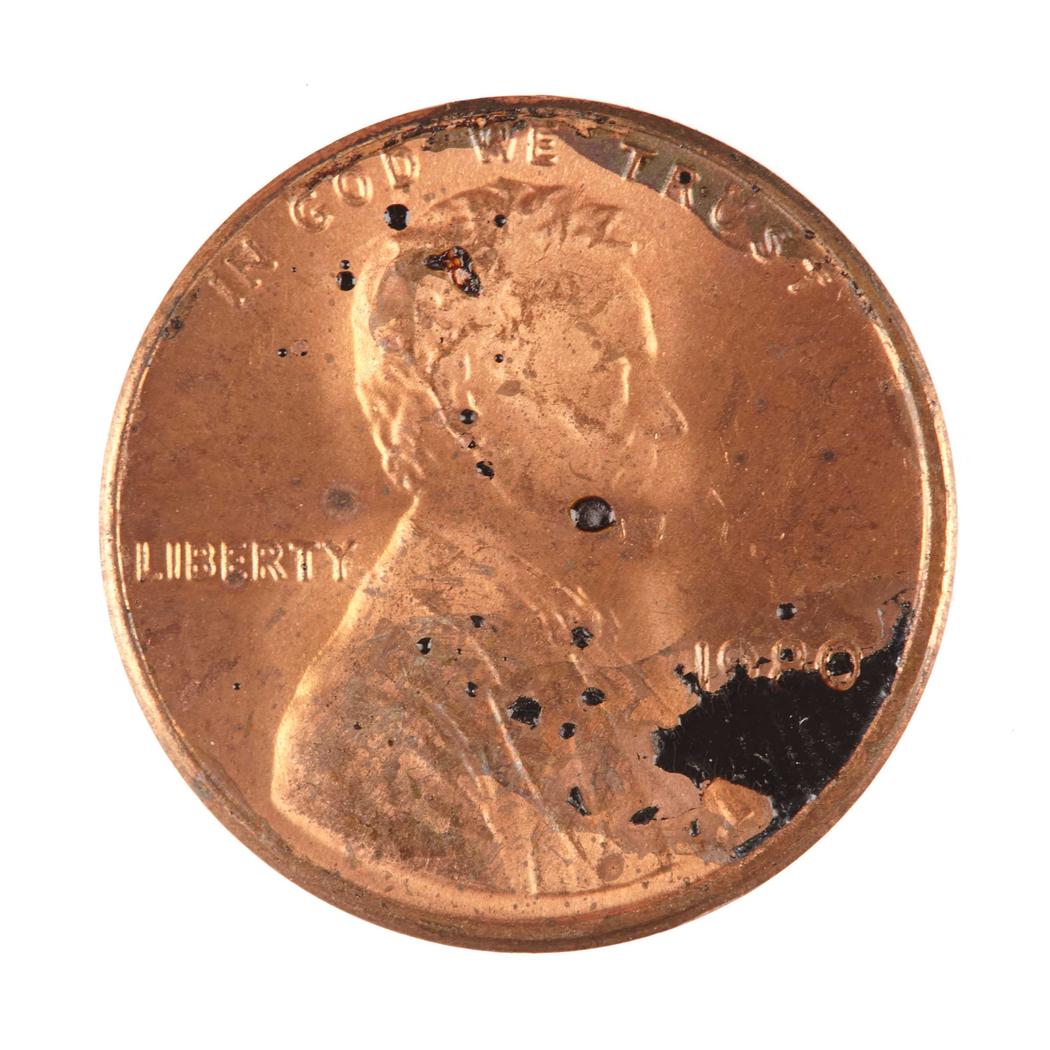
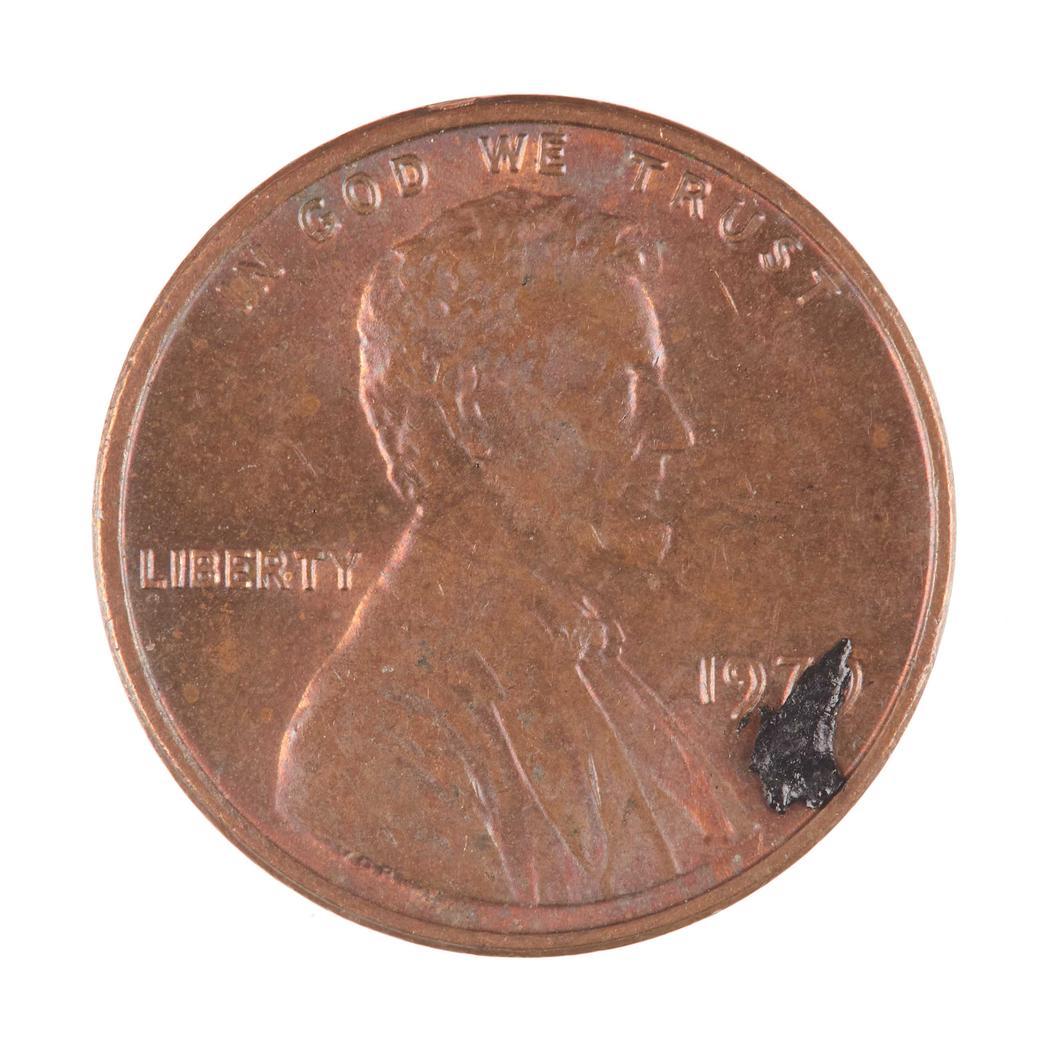
3D-Black
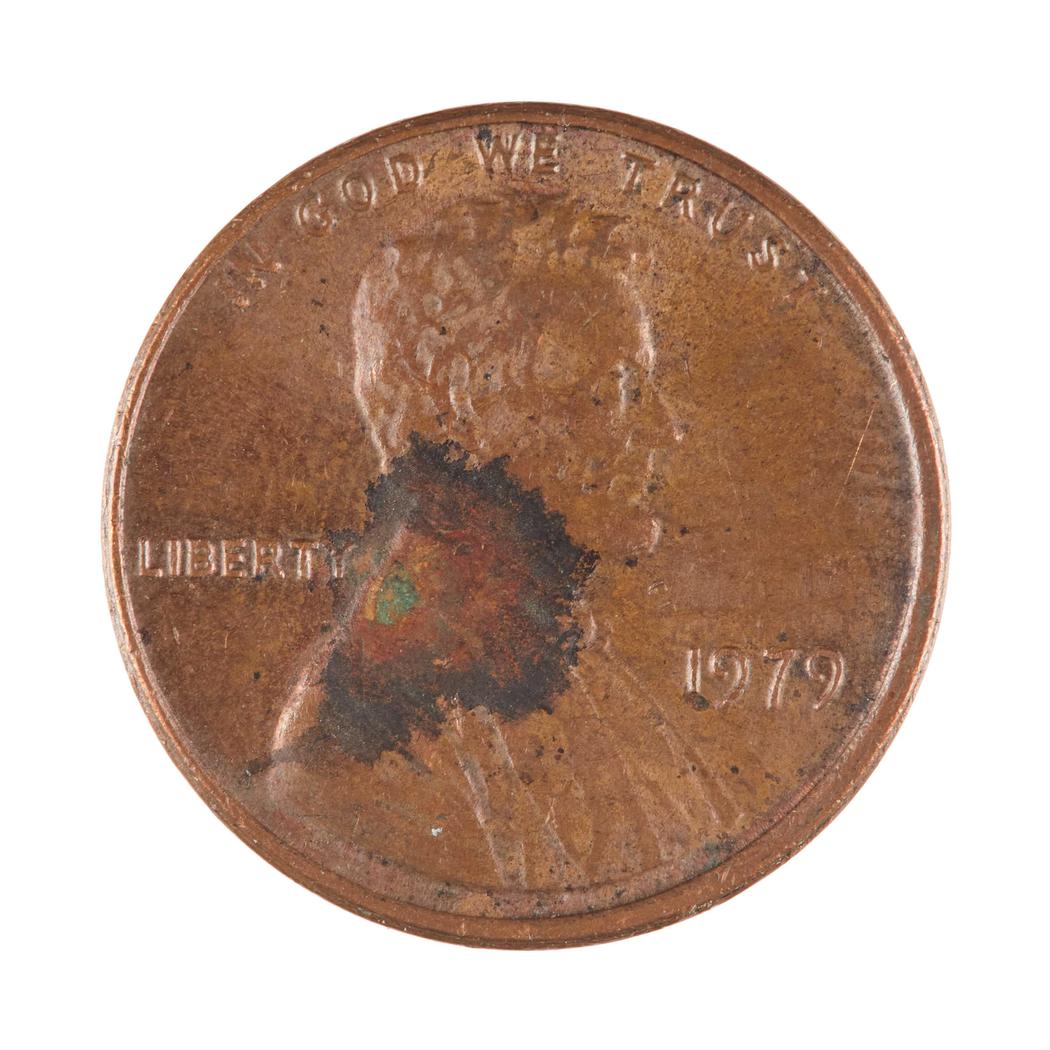
Raised, tar-like black residues that form thick deposits, often opaque and sculptural in character. Their volume creates a tactile “relief contamination.”
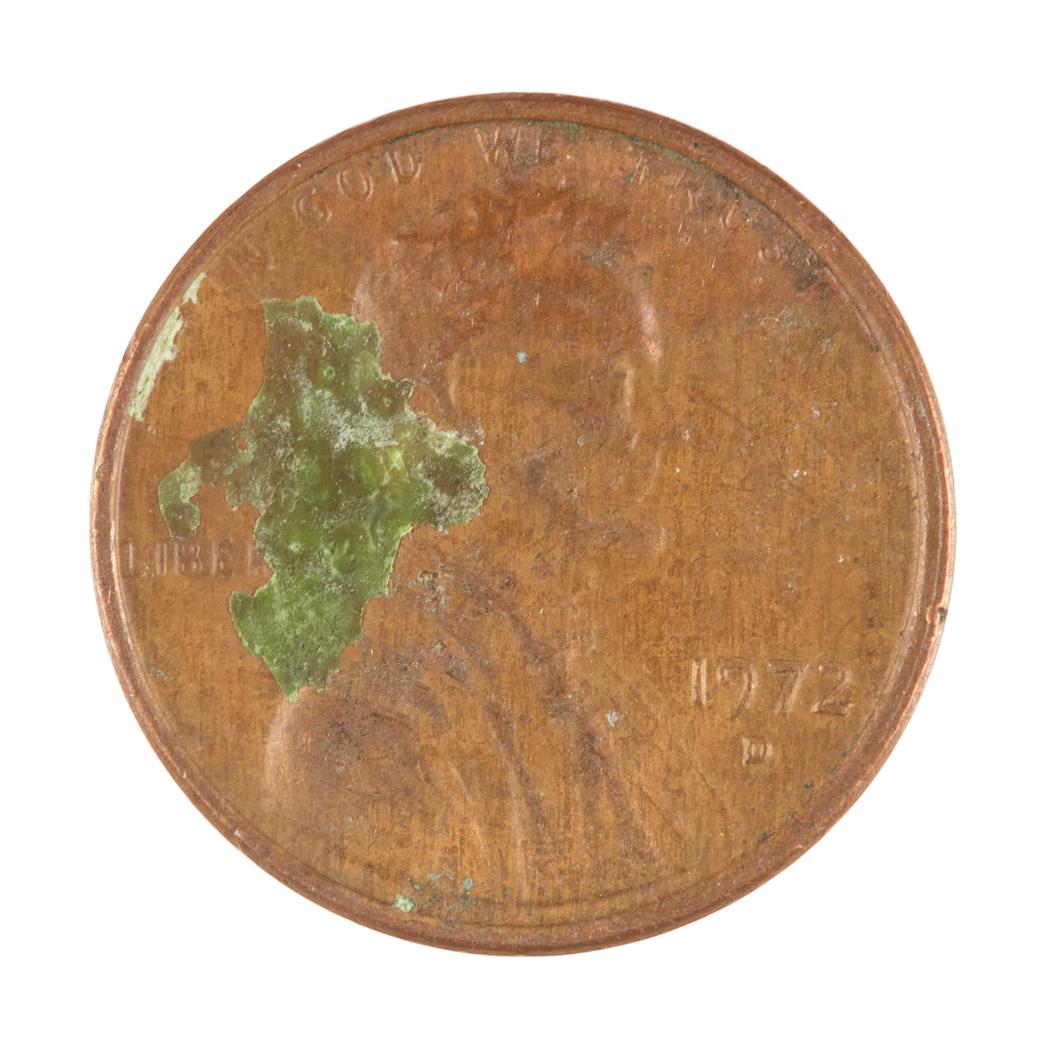
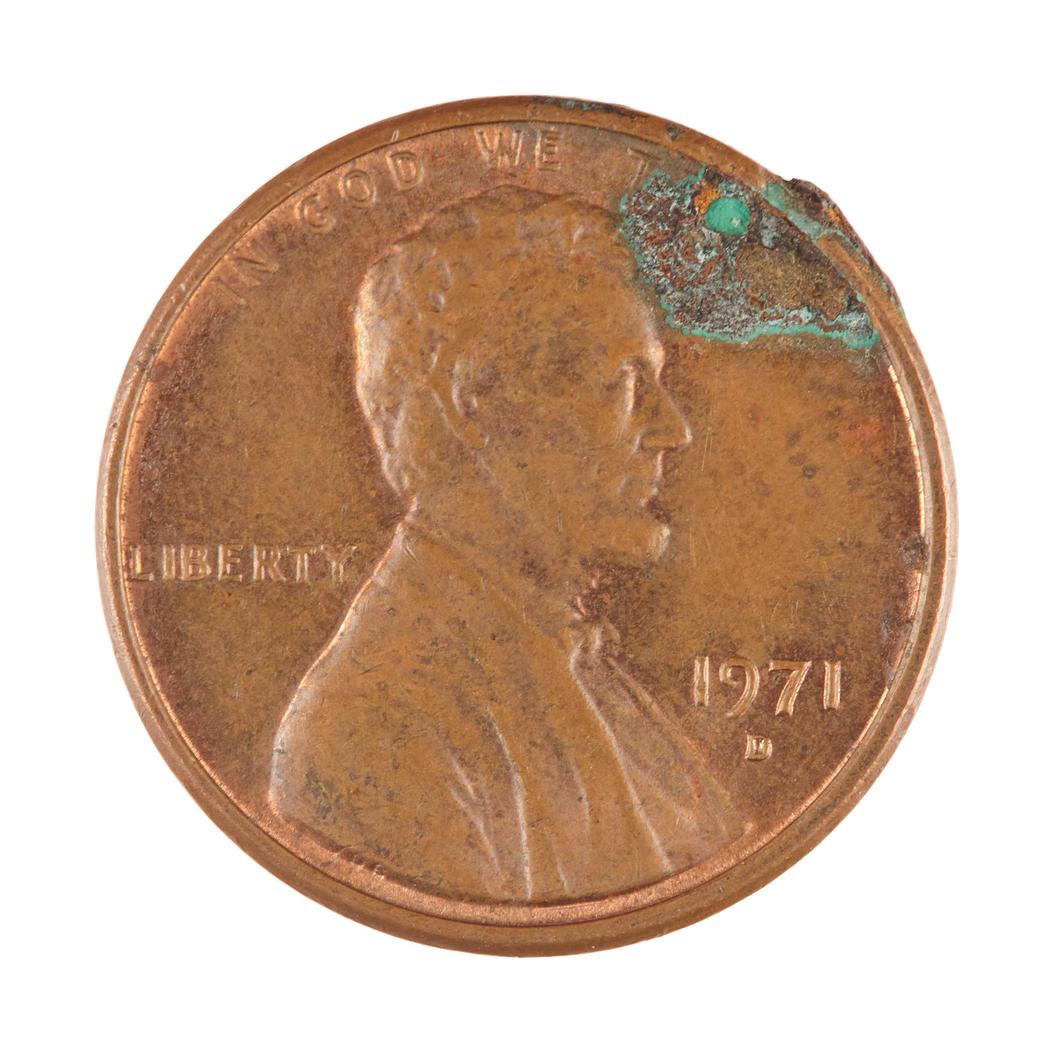
Alien Secretion
Unidentifiable translucent or greenish films, often semi-fluid in appearance, evoking organic excretion or residue. Their amorphous texture inspired the nickname.
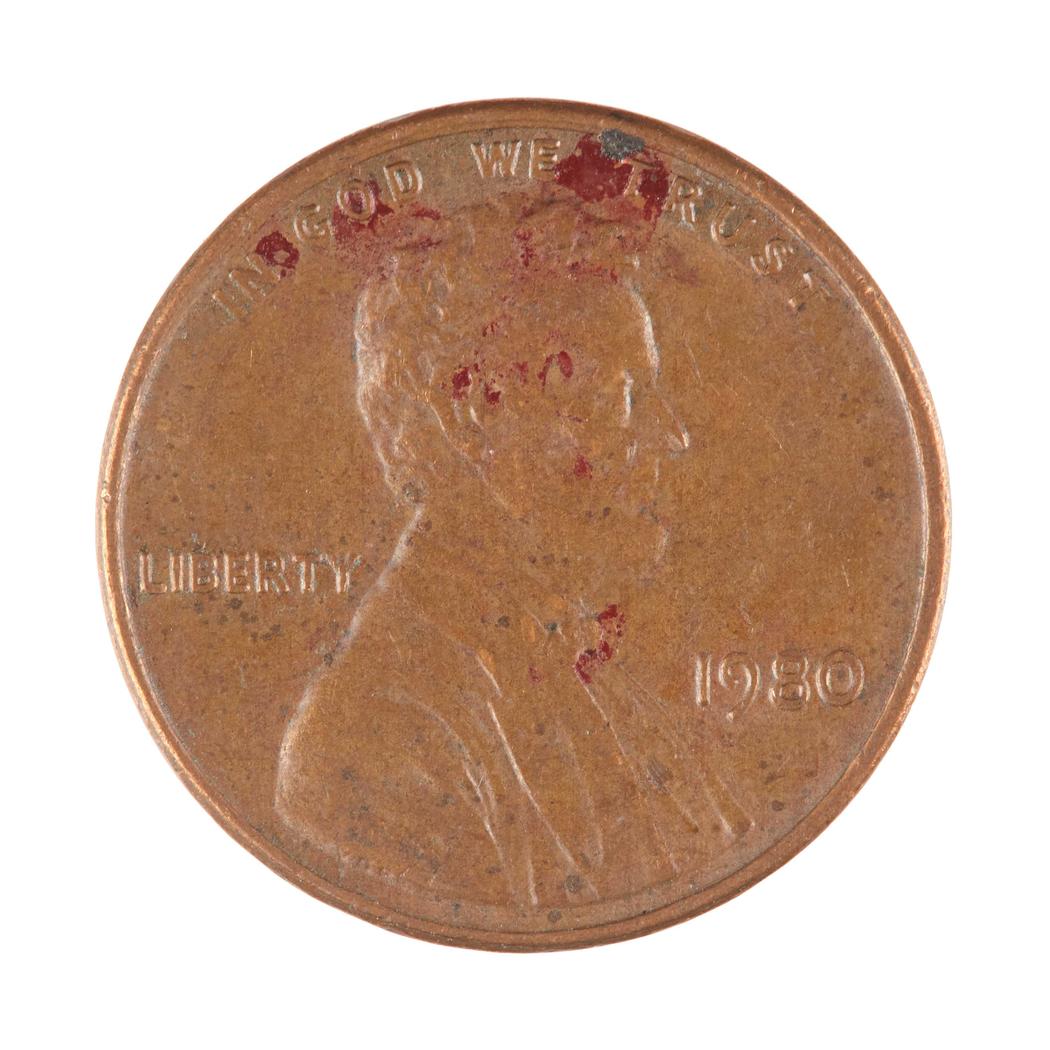
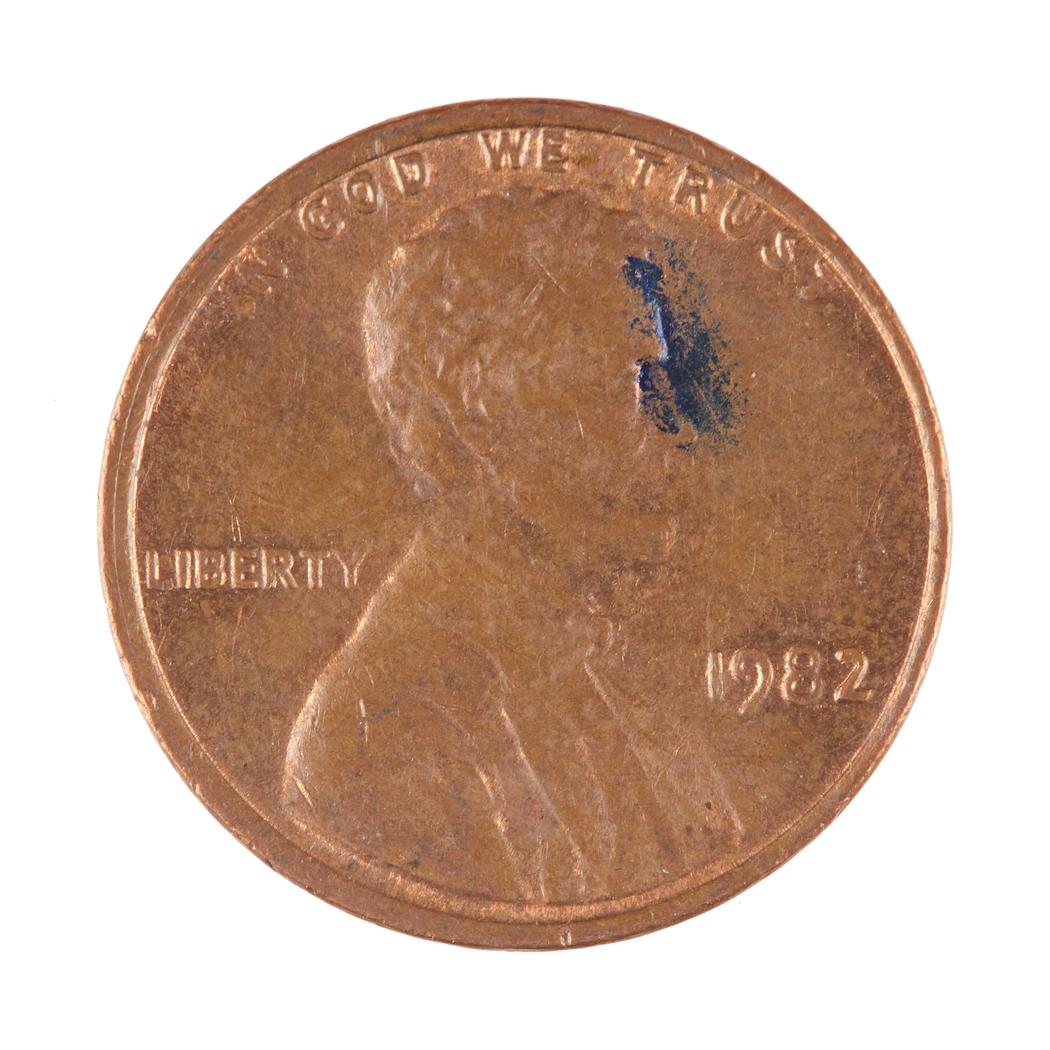
Paint
Colored layers applied post-minting. Can range from accidental splatter to deliberate gesture. Materially distinct from patina – a human mark upon copper.
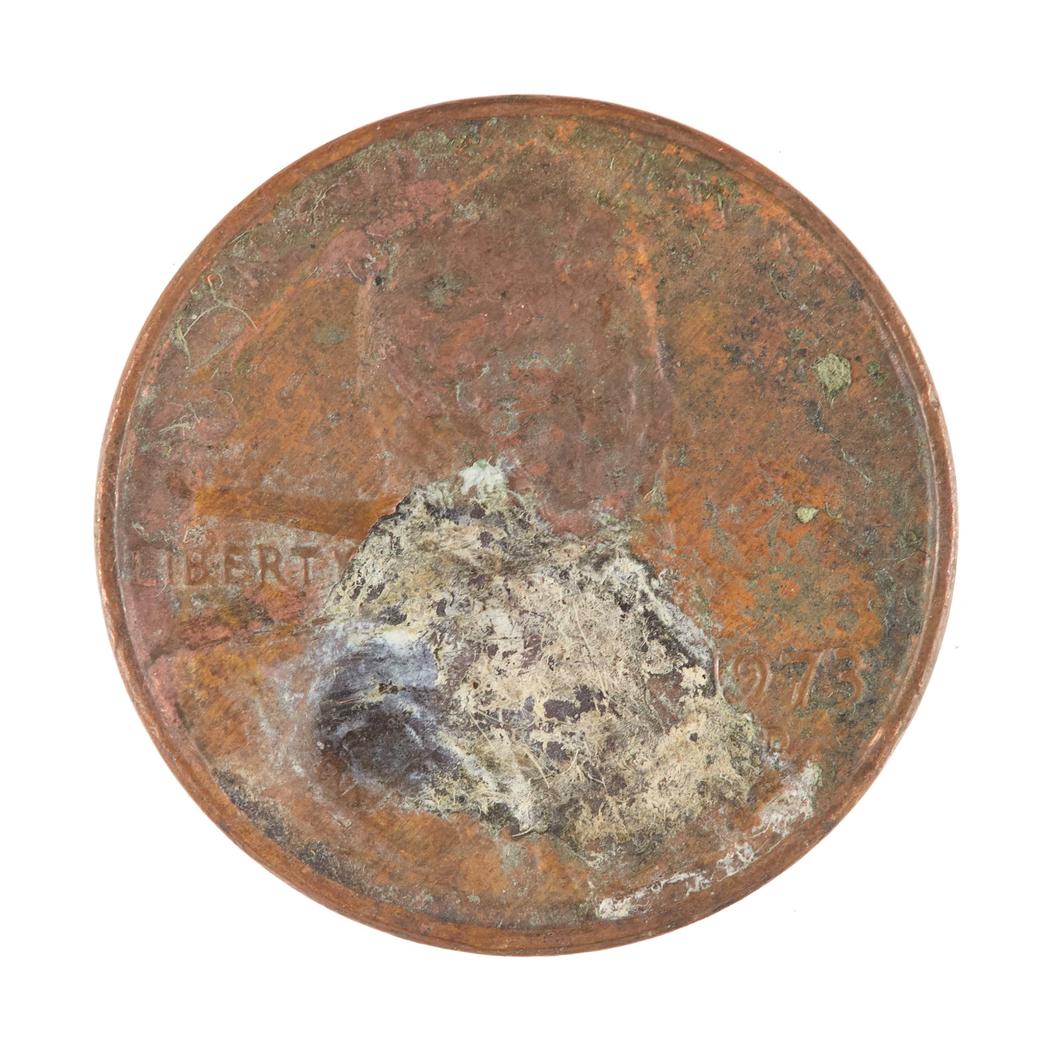
Obscure Adhesive
Opaque or cloudy adhesive deposits whose chemical base is unclear – typically thicker and more irregular than glue, with granular or matte finishes.
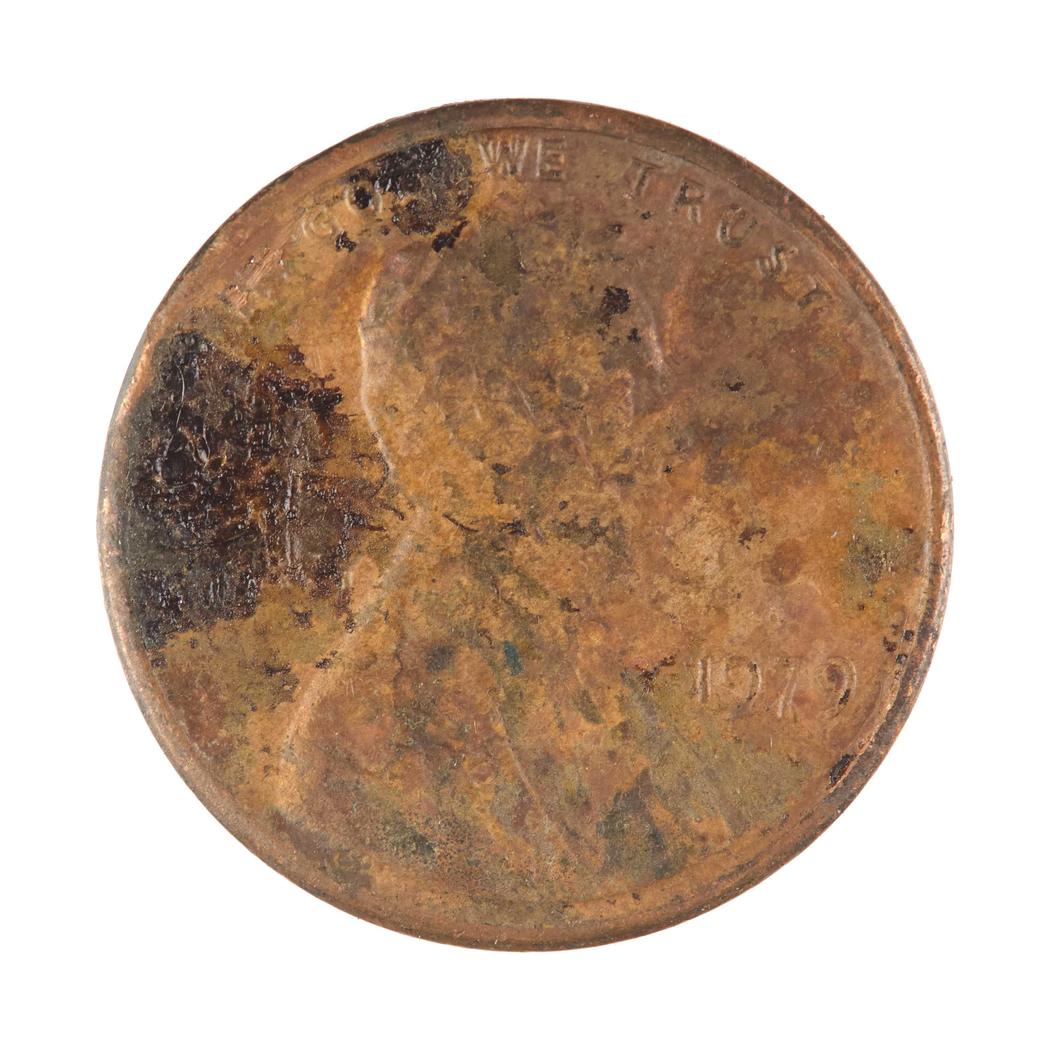
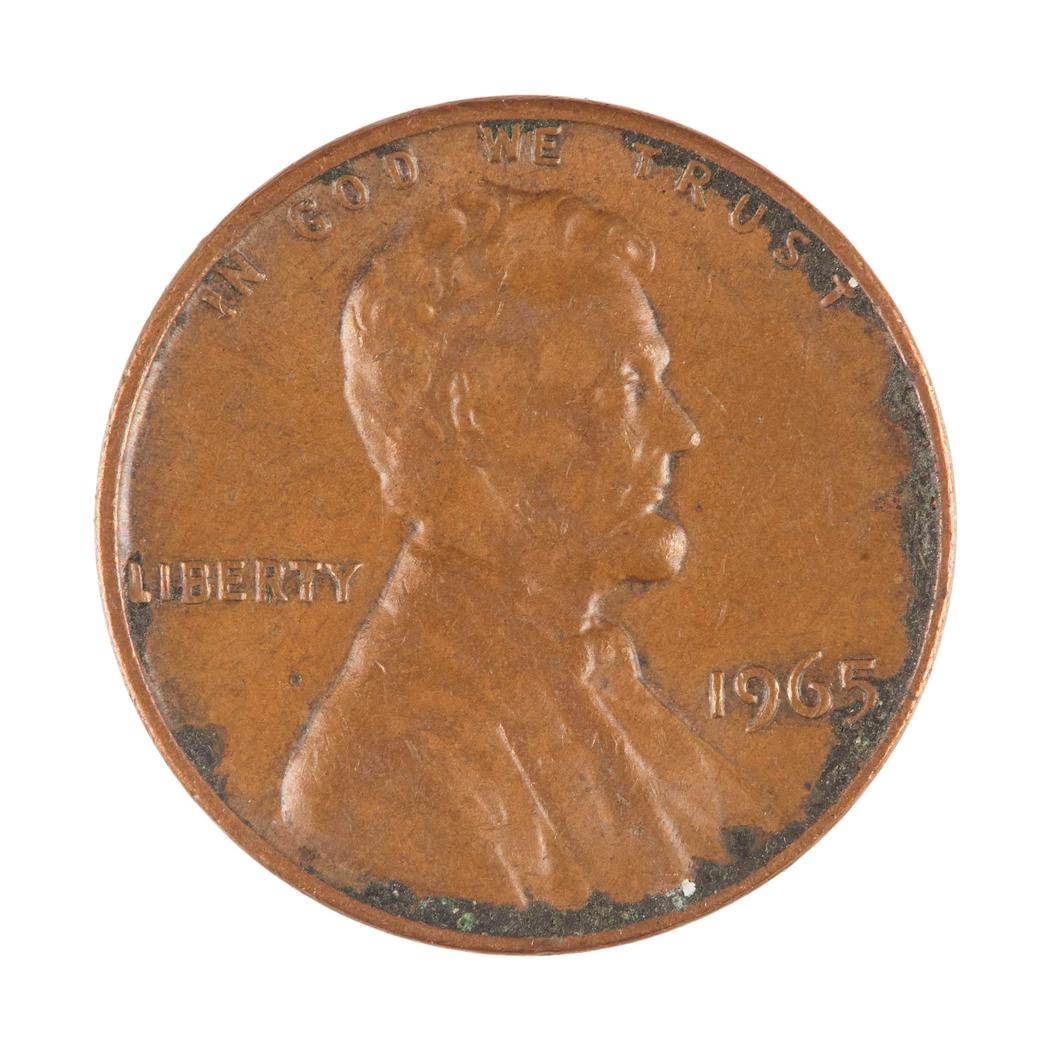
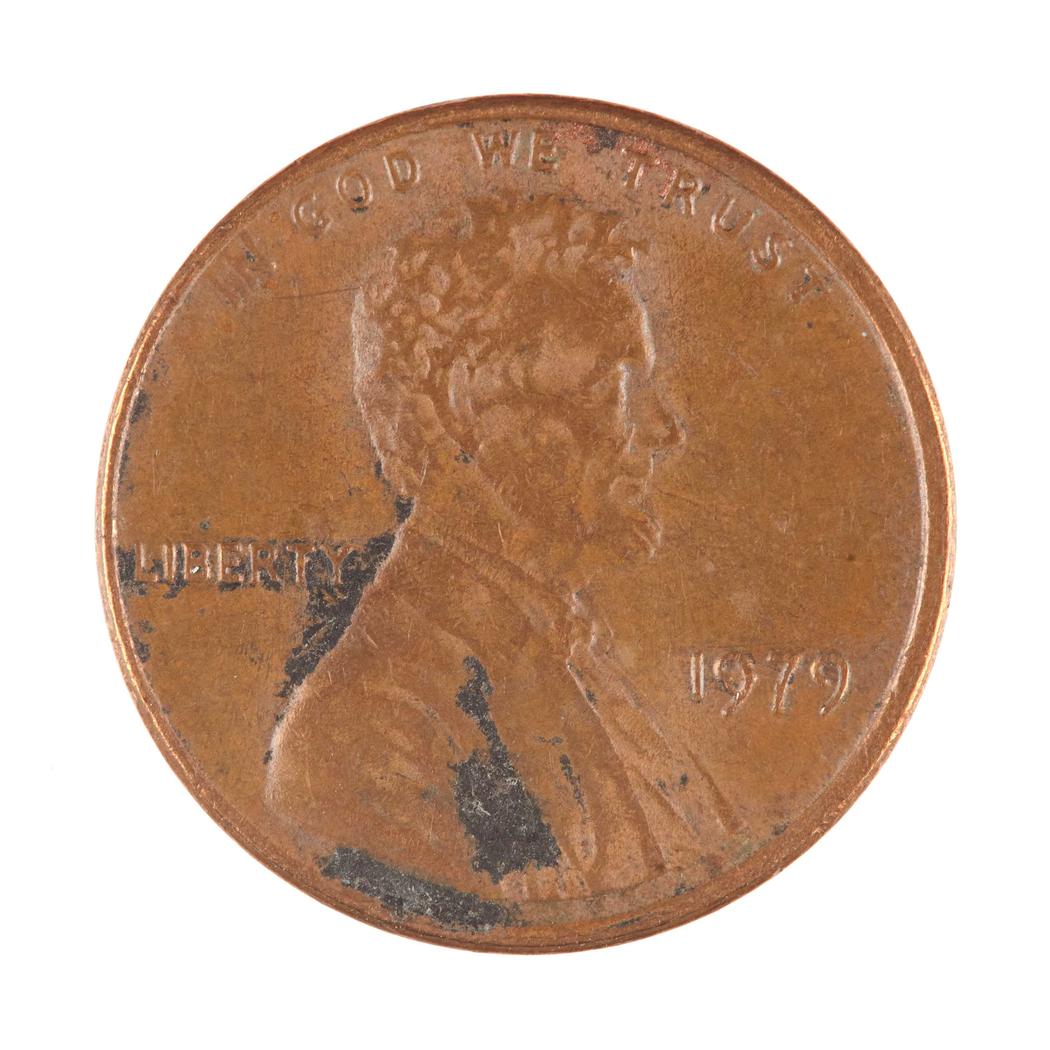
Dark Grime
Dense accumulations of dirt, oil, or particulate matter embedded into the copper surface. Creates a dark, low-gloss veil with organic irregularity.
Sea Salt
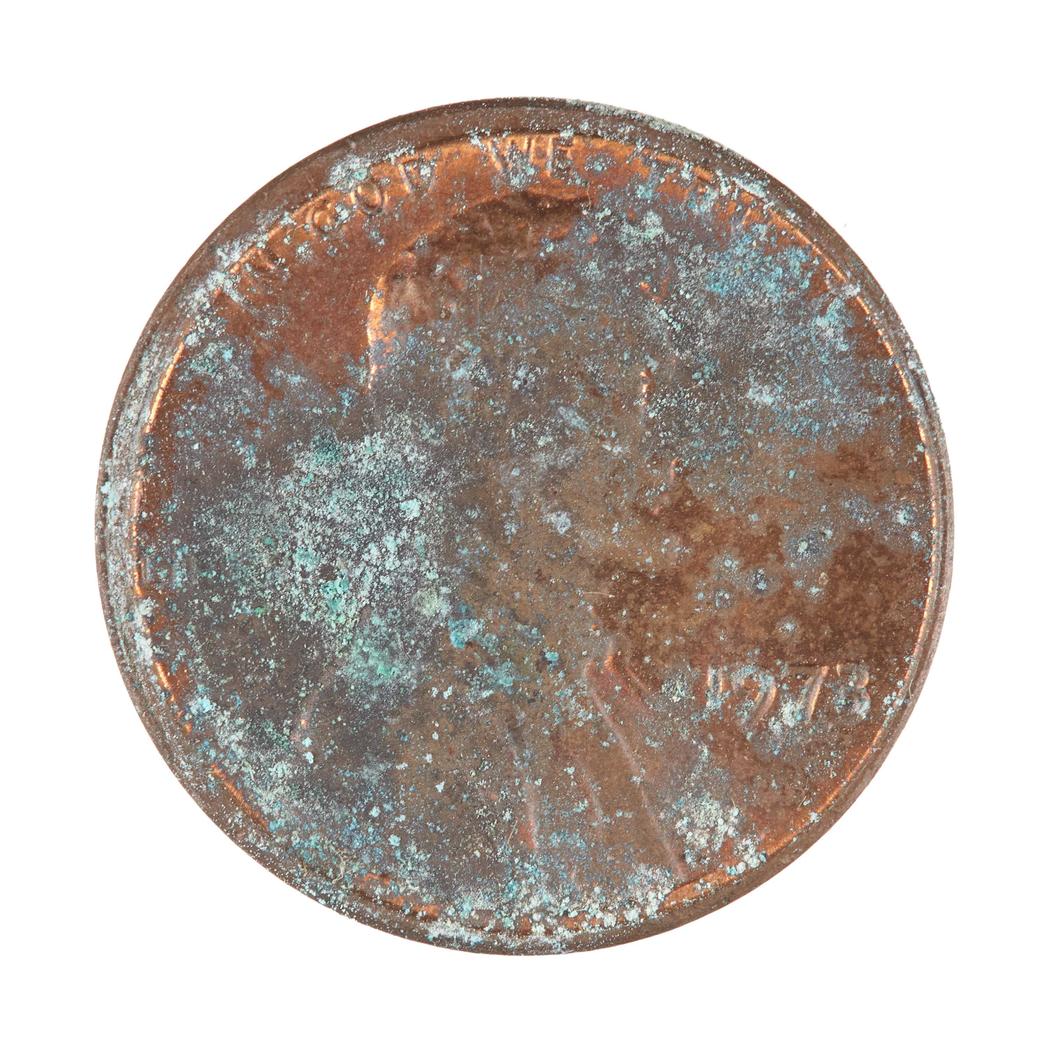
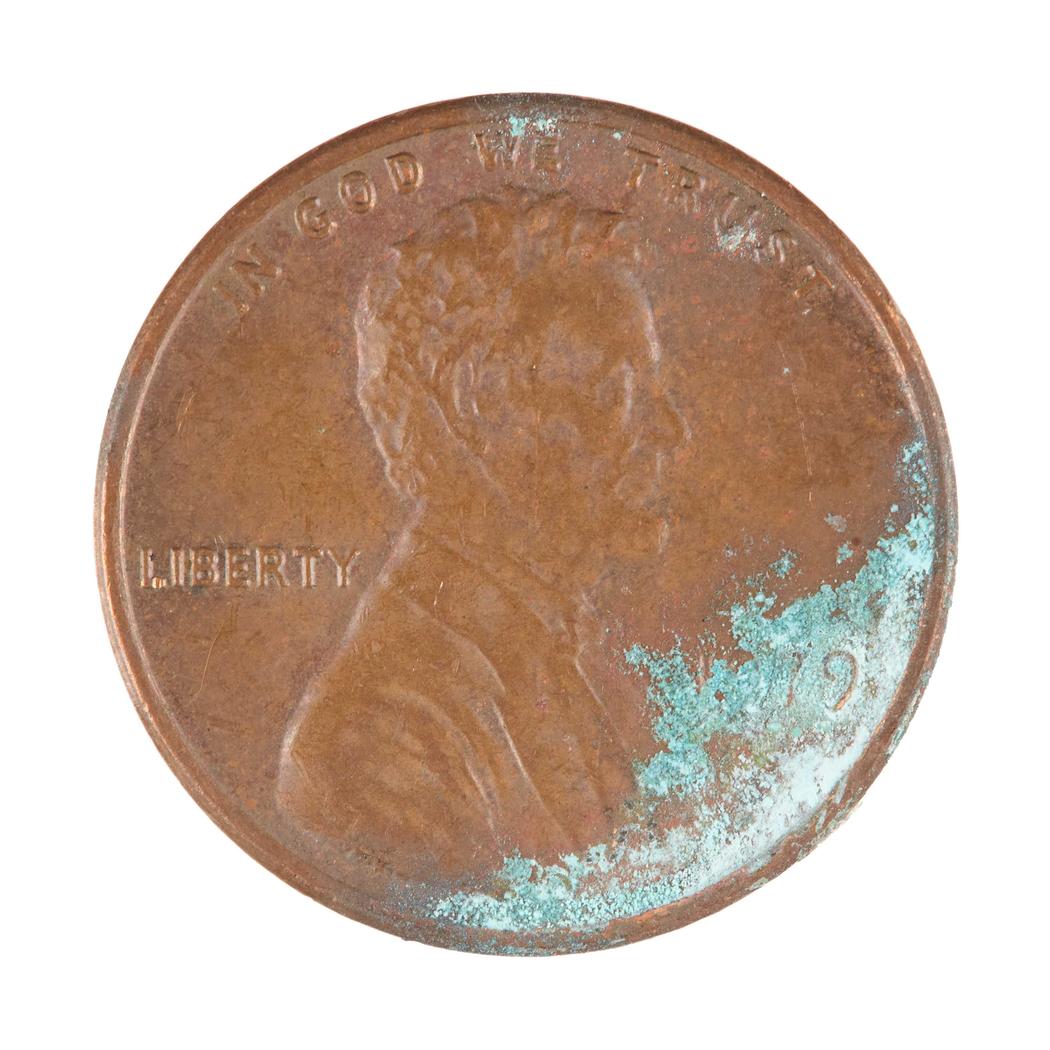
Crystalline encrustations of mineral salts, typically bluish or turquoise to whitish. Often form clustered blooms resembling dried seawater residue or efflorescence.
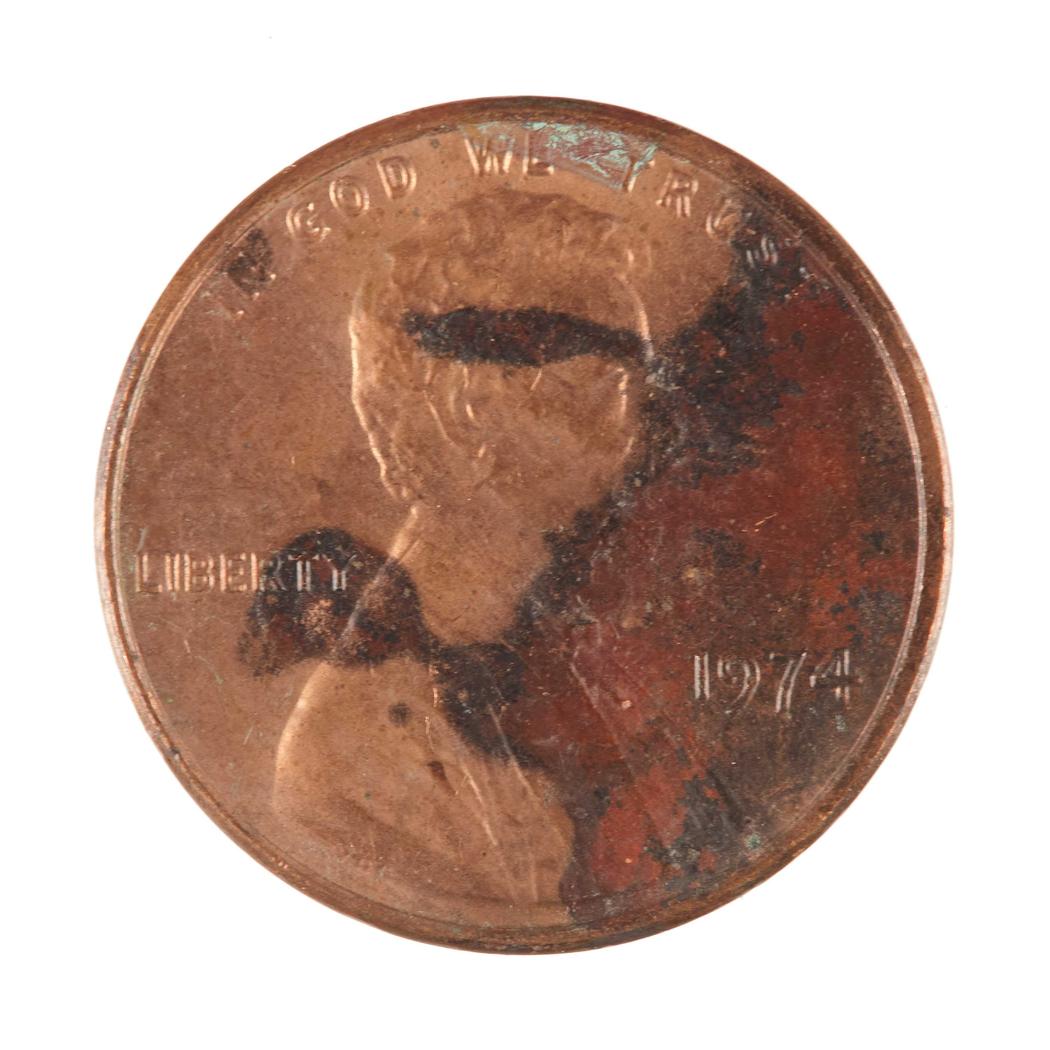
Blood
Reddish-brown splashes or smeared stains that read like dried blood at first glance, often with irregular edges, streaking, or a „drop” logic that suggests contact and motion.
This subtrait is deliberately cautious: we don’t claim the residue is actually blood, only that its color and behavior produce a strong blood-like association on copper, where many other substances can converge toward the same hue.
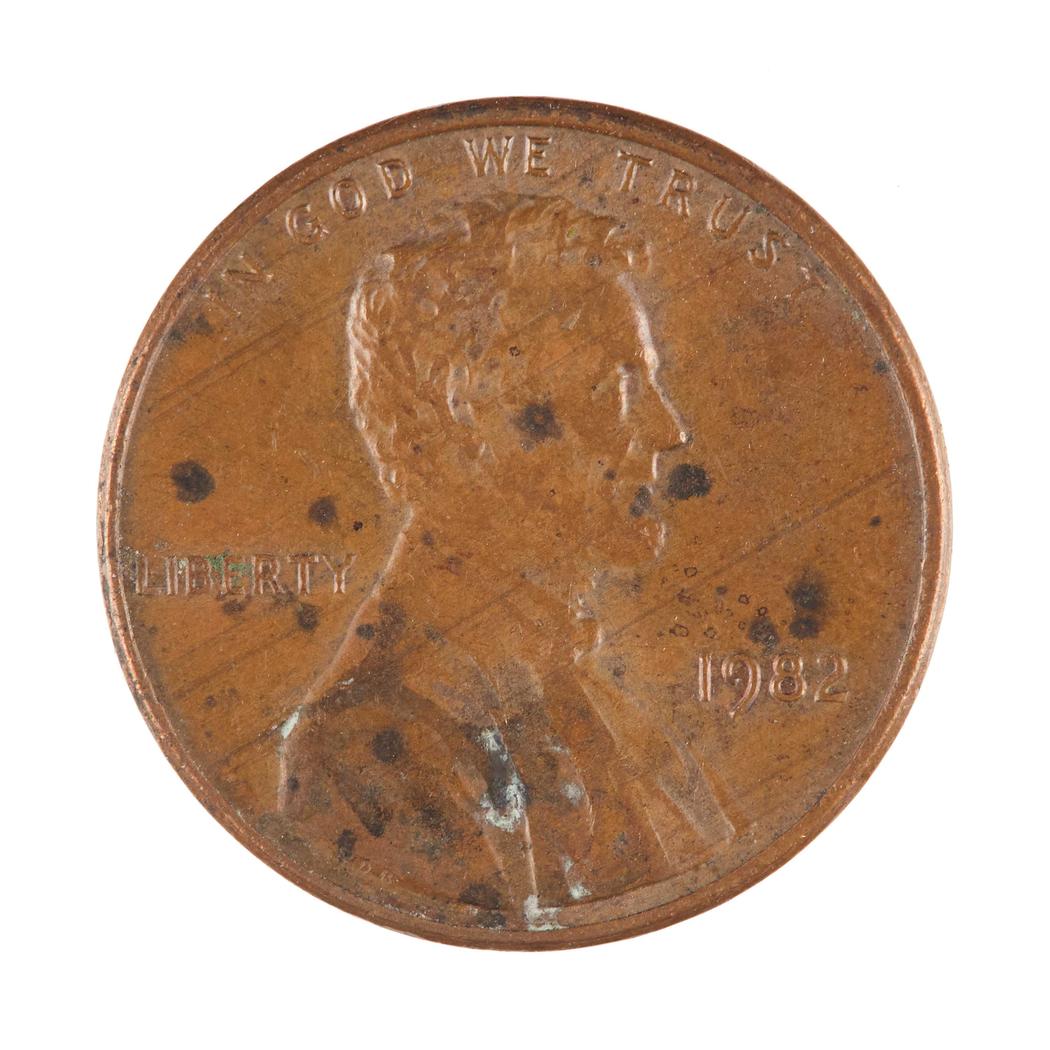
Speckles
Small particulate residues scattered across the surface. Their dotted pattern gives a spattered appearance.
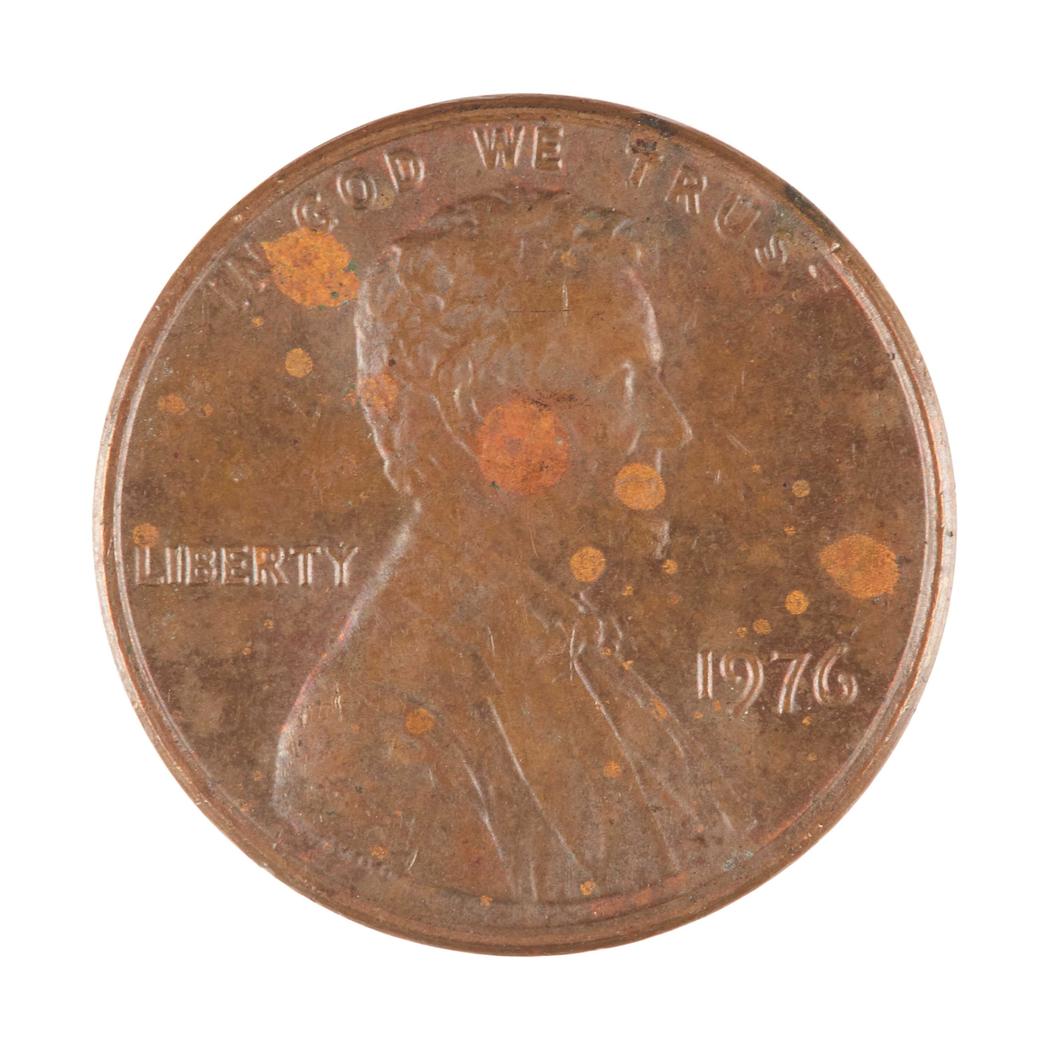
Unknown Liquid
Amorphous patches of dried fluid – unclear in composition but visually distinct. Often leave tide-like edges or pooling effects suggestive of evaporation.
Notes
- Taxonomic approach: The Contaminated trait operates as a container category – its subtraits index the spectrum of foreign interactions that occur between human use and environmental exposure.
- Interpretation: Each contamination narrates a distinct contact event, marking the CENT as a participant in unrecorded gestures – adhesive, corrosive, or otherwise.
- Visual hallmark: Residue and relief coexist; the foreign matter reads as both disruption and enrichment of the coin’s surface memory.
Version 1.0