Traits Atlas
Codebook, Minimums, Exceptions
White Drips & Streaks Residue / Patina Hybrid
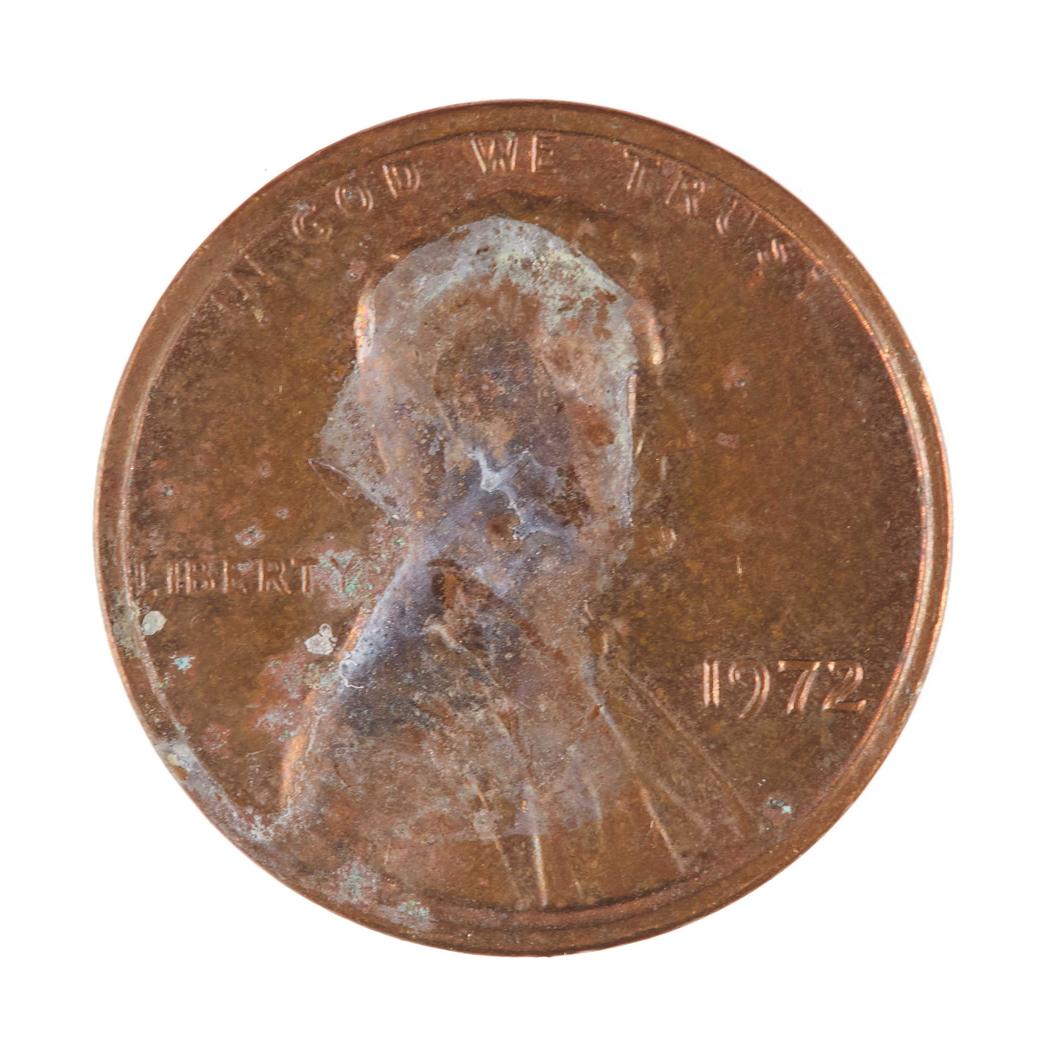
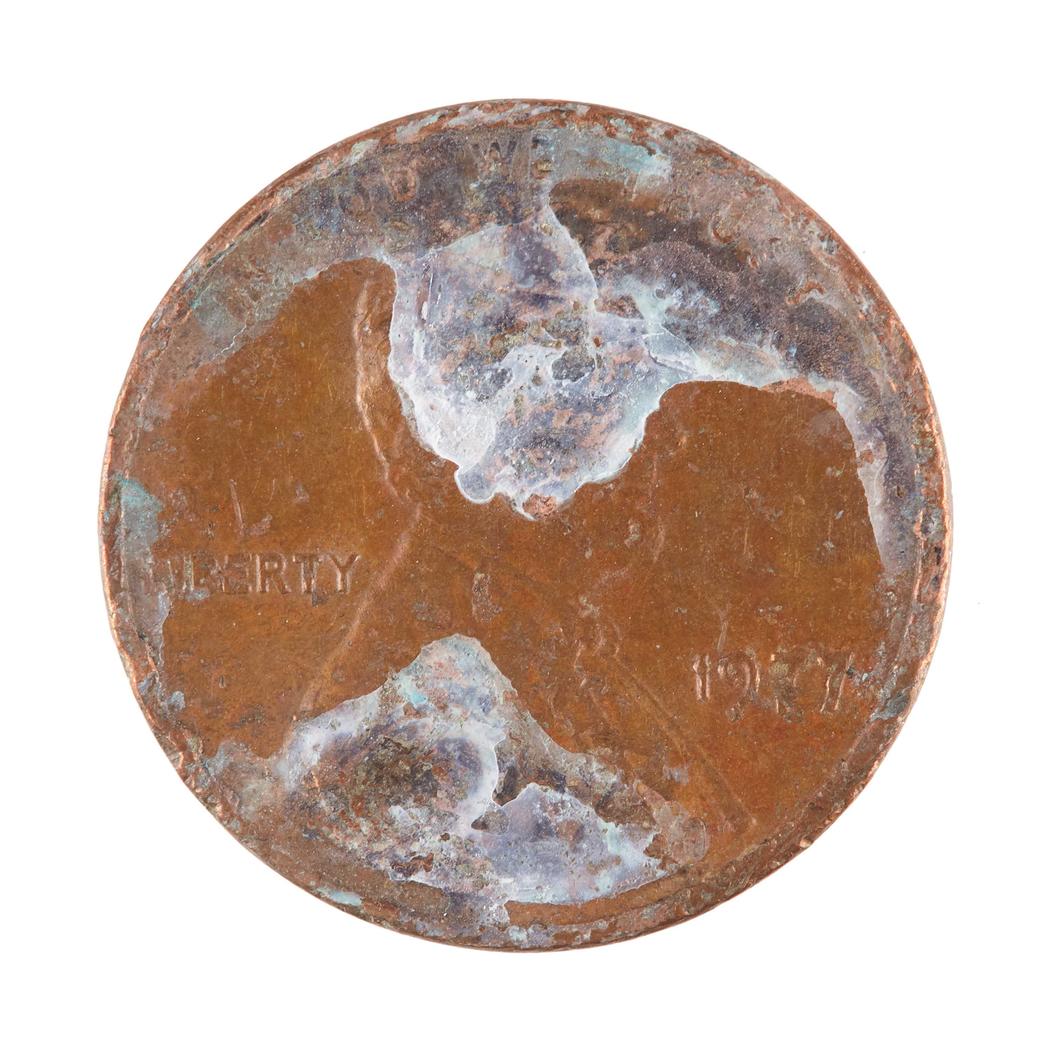
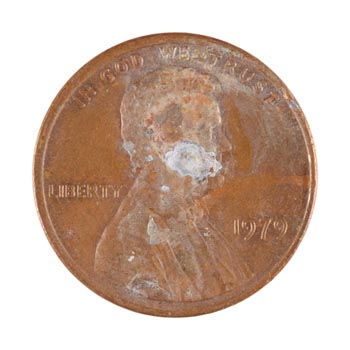
Summary: The White Drips & Streaks trait denotes a distinctive surface phenomenon – pale deposits or runs that overlay darker patinated zones. These markings are not a classical patina in the chemical sense but appear to result from a contaminant that has interacted with the copper surface over time, leaving behind a light crust or film. Their contrast against nearly black Obsidian regions heightens their painterly drama, producing a visual polarity between shadow and trace.
Definition: Qualifies when thin, clearly directional white or off-white marks are visible as drips or streaks across the coin’s face, particularly when set against darkened or contaminated backgrounds. The mark must read as a flow or run rather than a diffuse patch. Minor light mottling or uneven toning alone does not qualify.
Material Character: These traces likely originate from environmental contamination – liquid residues, mineral salts, or surface oxidation by external agents. Over time, the reaction between copper oxides and contaminants generates contrasting layers: white, powdery crusts juxtaposed with deep obsidian blacks. The resulting effect is both chemical and gestural, accidental and expressive.
Crucially, the white forms always register against the copper ground itself – their visibility and resonance depend on the underlying tonality of the metal, making the copper field an active part of the trait’s composition.
Variations
Notes
- Hybrid nature: Though partly resembling a patina, this trait originates from contamination processes rather than pure oxidation, sitting between the categories of Residue and Patina.
- Visual hallmark: Strong tonal contrast – white against deep black – often giving the coin a photographic or chiaroscuro quality.
- Interpretive aspect: The phenomenon’s ambiguous origin makes it special: it resists simple classification and exemplifies the project’s blending of material science and visual intuition.
Version 1.0